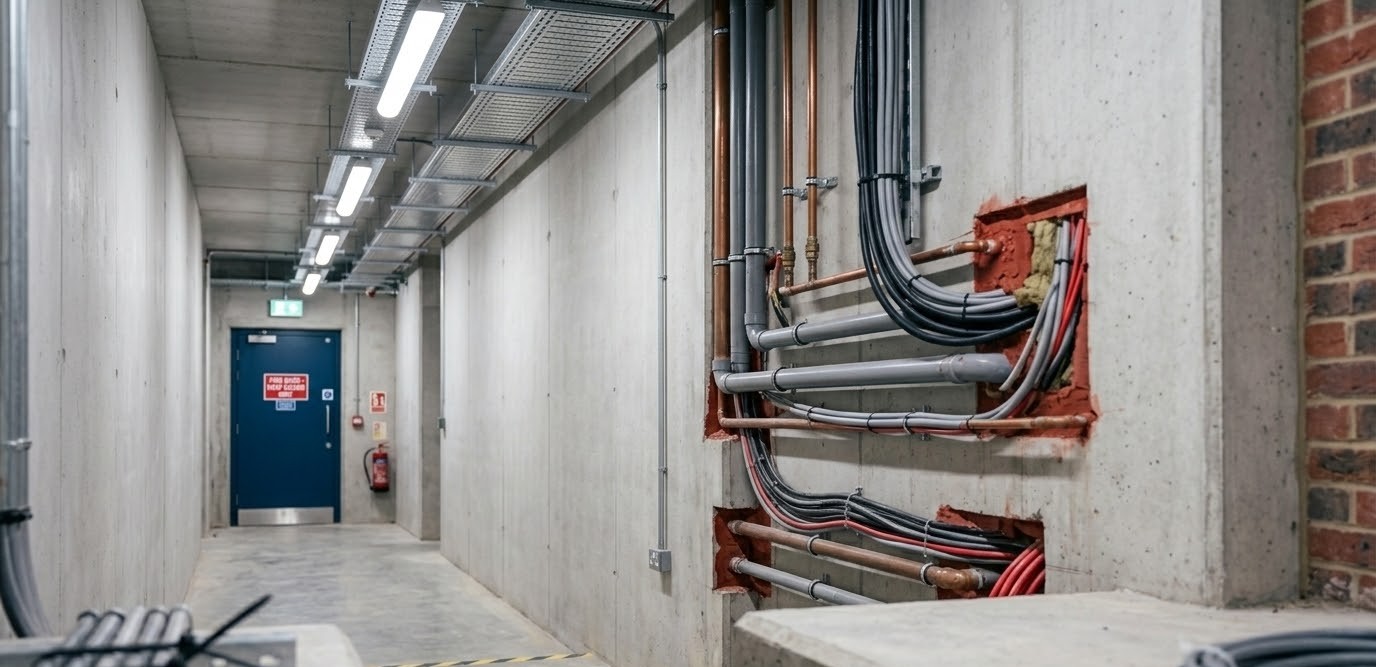
Fire safety in buildings is a critical responsibility for owners, developers, and facilities managers. One of the most effective ways to protect people and property is through fire compartmentation, a strategy designed to contain fire and smoke within designated areas.
At Zyan Fire Protection, we specialise in helping clients across London and the UK implement robust fire protection measures, including the installation of high-quality fire barriers that form an essential part of a building’s passive fire safety system.
Understanding Fire Compartmentation
Fire compartmentation divides a building into sections using fire-resistant walls, floors, and ceilings to contain fire and smoke. This approach slows the spread of flames, giving occupants more time to evacuate and reducing structural damage.
You might wonder, what is compartmentation? Simply put, it is the separation of areas within a building to prevent fire in one section from quickly affecting others. Effective compartmentation fire safety relies on all elements, including doors, walls, service penetrations, and fire barriers, to maintain compliance with Building Regulations Part B and protect lives.
What Are Fire Barriers and How Do They Work?
Fire barriers are specially designed materials installed in walls, floors, ceilings, and service voids to prevent the movement of fire and smoke. They act as a key component of fire compartmentation, creating a controlled environment that slows the spread of flames and hazardous smoke.
Common applications of fire barriers include:
- Vertical and horizontal cavities in walls and floors
- Slab edge perimeter protection
- Open spaces or roof voids using fire curtains or blankets
When correctly installed, fire barriers complement other fire protection systems such as fire doors and fire stopping materials. They ensure that each compartment maintains its integrity in an emergency, limiting fire damage and buying valuable evacuation time.
Compliance and Regulatory Considerations
In the UK, fire protection is governed by strict regulations. Compliance with Building Regulations Part B is mandatory for all new builds and significant refurbishments. These standards cover fire compartmentation, fire barriers, and passive fire protection measures.
Key compliance points include:
- Fire barriers must be installed according to certified methods and tested materials
- All penetrations through walls, floors, and ceilings require proper sealing to maintain compartmentation
- Regular inspection and maintenance are required to ensure ongoing effectiveness
A failure to comply with these standards can lead to legal penalties, insurance issues, and, most importantly, serious safety risks.
Why Fire Barriers Are Essential for Safety
Fire barriers offer multiple safety benefits beyond regulatory compliance. They:
- Prevent the rapid spread of fire and smoke, protecting lives and property
- Maintain compartmentation, reducing structural damage
- Enhance the effectiveness of other fire protection measures
- Support fire strategy plans and compliance audits
In residential buildings, this means safer escape routes for occupants. In commercial and industrial environments, fire barriers help protect critical assets and minimise downtime during emergencies.
Why Choose Zyan Fire Protection for Fire Barrier Installation
At Zyan Fire Protection, we bring a combination of expertise, certification, and independence that ensures your fire safety solutions are reliable and compliant.
Our advantages include:
- Certified and experienced contractors trained in passive fire protection
- Tailored fire barrier solutions for commercial, residential, and public sector buildings
- Full compliance with UK fire safety regulations and Building Regulations Part B
- Transparent advice and documentation to support audits, insurers, and local authorities
- Rapid response and project delivery across Greater London and the UK
We focus on protection and prevention, not just product installation. By working with our team, you can be confident that every fire barrier is positioned to maximise safety, minimise risks, and maintain compliance.
Maintaining Fire Compartmentation Over Time
Fire compartmentation is not a one-time installation. Effective fire protection requires ongoing monitoring and maintenance. Our certified team can conduct compartmentation fire safety surveys, check the condition of fire barriers, and provide remedial work where necessary. This ensures your building remains compliant and continues to protect occupants in the event of a fire.
Conclusion
Fire barriers are an indispensable element of fire compartmentation, providing critical protection against the spread of fire and smoke. Understanding what is compartmentation and ensuring proper fire barrier installation is essential for building safety, regulatory compliance, and peace of mind.
By partnering with Zyan Fire Protection, you gain a trusted, independent fire safety partner who prioritises protection, compliance, and clear guidance.
FAQs
How often should fire barriers be inspected?
Fire barriers should be inspected at least annually or whenever building modifications are made that could affect compartmentation. Regular surveys help identify gaps, wear, or non-compliant installations.
Are fire barriers required in all buildings?
Most new builds and significant refurbishments must include fire barriers as part of their fire compartmentation strategy. Requirements vary based on building type, height, and occupancy, following Building Regulations Part B.
Can fire barriers be retrofitted in existing buildings?
Yes, fire barriers can be installed in existing structures to improve compartmentation and compliance. Our team can assess your building and recommend tailored solutions that meet fire protection standards.
Take Action for Safer Buildings
Ensure your property is fully protected and compliant. Book a free site survey with Zyan Fire Protection today and take the first step towards effective fire compartmentation and peace of mind.