Fire safety is a responsibility every property owner, manager, or developer must take seriously. Among the most effective passive fire protection measures are fire doors. They not only safeguard lives but also protect property by containing fire and smoke within defined areas.
To choose the right option, you need to understand fire door types and how fire door ratings UK work. This guide will walk you through everything you need to know, from FD30 doors to the role these systems play in your building’s fire strategy.
What Are Fire Doors?
A fire door is a specially designed door set that helps prevent the spread of fire and smoke. Unlike standard doors, fire doors are built with fire-resistant materials such as solid timber, steel, or composite cores. They also include seals and hardware designed to withstand high temperatures.
By keeping a fire contained within one part of a building, fire doors give occupants more time to escape and allow emergency services to respond effectively. They also ensure compliance with UK Building Regulations, which require fire compartmentation in both commercial and residential settings.
Fire Door Types
Different environments call for different fire door types. Choosing the right one ensures both safety and compliance. The most common types include:
- Timber Fire Doors: A widely used option in residential and commercial buildings, providing both function and aesthetic appeal.
- Steel Fire Doors: Highly durable and often used in industrial settings where strength and security are critical.
- Glazed Fire Doors: Feature specialist fire-resistant glass to allow visibility and light while maintaining fire resistance.
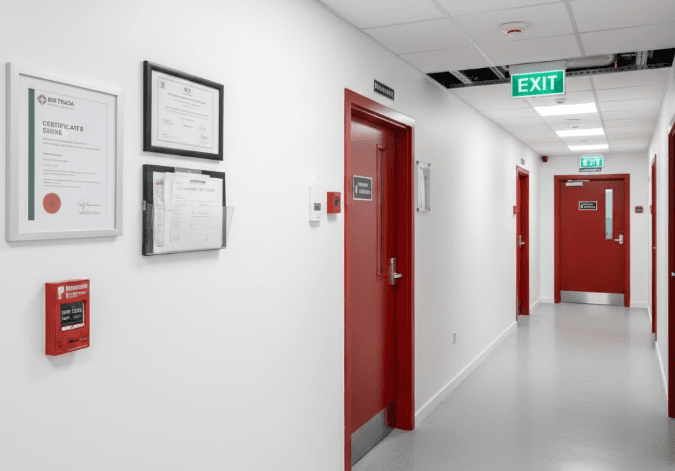
- Double Fire Doors: Used in wider openings such as corridors, schools, or hospitals, ensuring accessibility while containing fire spread.
- Acoustic Fire Doors: Provide both fire resistance and soundproofing, ideal for mixed-use or commercial developments.
Each of these fire door types can be manufactured and certified to meet specific fire ratings.
Fire Door Types: Homes vs Businesses
Beyond material and construction, fire door needs also differ significantly depending on whether you’re protecting a home or a business.
In residential properties, fire doors are most commonly required in higher-risk areas such as kitchens, garages, or between floors in multi-storey houses. FD30 is typically sufficient, and doors are often fitted in loft conversions, hallways, and internal doors leading to garages. FD30 doors are also frequently required in houses of multiple occupation (HMOs) and flats, where the priority is balancing fire safety with a design that fits the home.
In commercial properties, higher occupancy levels, complex layouts, and stricter legal responsibilities usually call for a more robust approach. Business fire doors often need FD60 or higher, heavy-duty construction to withstand frequent use, and integration with fire alarms, access systems, and emergency lighting. In sectors such as healthcare, hospitality, or education, fire doors must meet higher safety standards while minimising disruption to daily operations.
The core difference comes down to rating, durability, and regulatory demand: homes generally need FD30 for general safety and compliance, while businesses often require FD60 or higher depending on the fire strategy, with commercial doors built for frequent use and integration with wider safety systems.
Understanding Fire Door Ratings UK
When selecting a fire door, the rating indicates how long it can withstand exposure to fire. Fire door ratings UK are measured in minutes, showing the period during which the door will hold back flames and smoke under test conditions.
The most common ratings are:
- FD30: Provides 30 minutes of fire resistance. This is the minimum standard for most residential properties and a popular choice across housing and social housing developments.
- FD60: Offers 60 minutes of resistance and is commonly specified for commercial properties, healthcare settings, and larger buildings.
- FD90 and FD120: These specialist doors provide 90 to 120 minutes of protection and are used in high-risk environments or large-scale developments.
Understanding these ratings helps you match the correct fire door to your property’s needs, ensuring both safety and compliance with Building Regulations Part B.
How to Choose Between FD30 and FD60
The right rating depends on your building type and level of fire risk:
- For homes, flats, and small offices, FD30 is often sufficient.
- For hospitals, schools, warehouses, and high-rise properties, FD60 is usually the safer choice.
- If your building’s fire strategy specifies a particular rating, you must follow it to remain compliant.
A fire risk assessment or compartmentation survey can help determine the right fire door rating for your specific property, rather than relying on general guidance alone.
Benefits of Fire Doors
Fire doors play a crucial role in a building’s overall fire strategy. The key benefits include:
- Protecting escape routes for occupants
- Containing fire and smoke within one area
- Meeting legal requirements for fire safety
- Reducing damage to property and assets
- Supporting insurance compliance
By installing the correct fire door types and ensuring they meet the right fire door ratings UK, you create safer environments for everyone who uses your building.
Why Choose Zyan Fire Protection for Fire Door Services
When it comes to fire safety, expertise and compliance are everything. At Zyan Fire Protection, we specialise in providing certified fire door solutions that keep your property safe and compliant. Here’s why clients trust us:
- Certified and experienced contractors with BM Trada accreditation
- Comprehensive services including inspections, installations, and remedial works
- Clear digital reporting with photographic evidence, floor plans, and risk ratings
- Fast turnaround times and a professional, approachable team
- Independent and impartial advice tailored to your fire strategy
From initial surveys to ongoing maintenance, Zyan Fire Protection delivers end-to-end fire door solutions that protect lives and ensure compliance across London and the UK.
FAQs About Fire Doors
What is the difference between FD30 and FD60 fire doors?
FD30 doors provide 30 minutes of fire resistance, while FD60 doors offer 60 minutes. The choice depends on your building type, layout, and regulatory requirements.
Do fire doors need regular inspections?
Yes, fire doors should be inspected regularly to ensure seals, hinges, and frames remain intact. Commercial properties should typically be inspected every six months, with residential properties, especially HMOs and flats, also requiring regular checks. Routine inspections help maintain compliance and safety.
Can I upgrade an existing door to meet fire door ratings in the UK?
Not all standard doors can be upgraded. Fire doors must be tested and certified as complete door sets. It is best to seek professional advice before making changes.
How do I know if my fire doors are compliant?
A professional inspection or compartmentation survey by a certified contractor such as Zyan Fire Protection will confirm whether your fire doors meet current regulations.
Conclusion
Fire doors are one of the most important elements of passive fire protection. By understanding the different fire door types and fire door ratings in the UK, from FD30 to higher-rated options, you can make informed decisions that protect both people and property.
To ensure your building is fully compliant and safe, trust the experts who specialise in fire protection every day.
Ready to enhance your building’s fire safety with certified fire doors?
Contact Zyan Fire Protection today for expert guidance, surveys, and installations that keep you compliant and protected.