Healthcare environments are among the most complex buildings to manage from a fire safety perspective. Hospitals, clinics, and care homes operate continuously, accommodate vulnerable occupants, and rely on highly serviced infrastructure. This combination creates unique risks that must be carefully controlled through effective design, maintenance, and inspection.
One of the most critical aspects of managing risk in these environments is healthcare fire protection, which requires a structured approach to preventing fire and smoke spread while ensuring safe evacuation routes remain intact at all times.
In this article, we explore the most common challenges healthcare facilities face and how robust fire protection strategies can help maintain safety and compliance.
Why Healthcare Buildings Present Unique Fire Safety Challenges
Healthcare buildings are fundamentally different from standard commercial properties. They are live environments where patients may be immobile, staff operate under pressure, and critical systems cannot simply be shut down.
Some of the main challenges include:
- High dependency on medical equipment and electrical systems
- Continuous occupancy with limited evacuation flexibility
- Complex layouts with multiple compartments and service penetrations
- Frequent building alterations and maintenance works
- Strict hygiene and infection control requirements
These factors make maintaining effective fire protection significantly more demanding than in other sectors.
Challenge 1: Hidden Breaches in Compartmentation
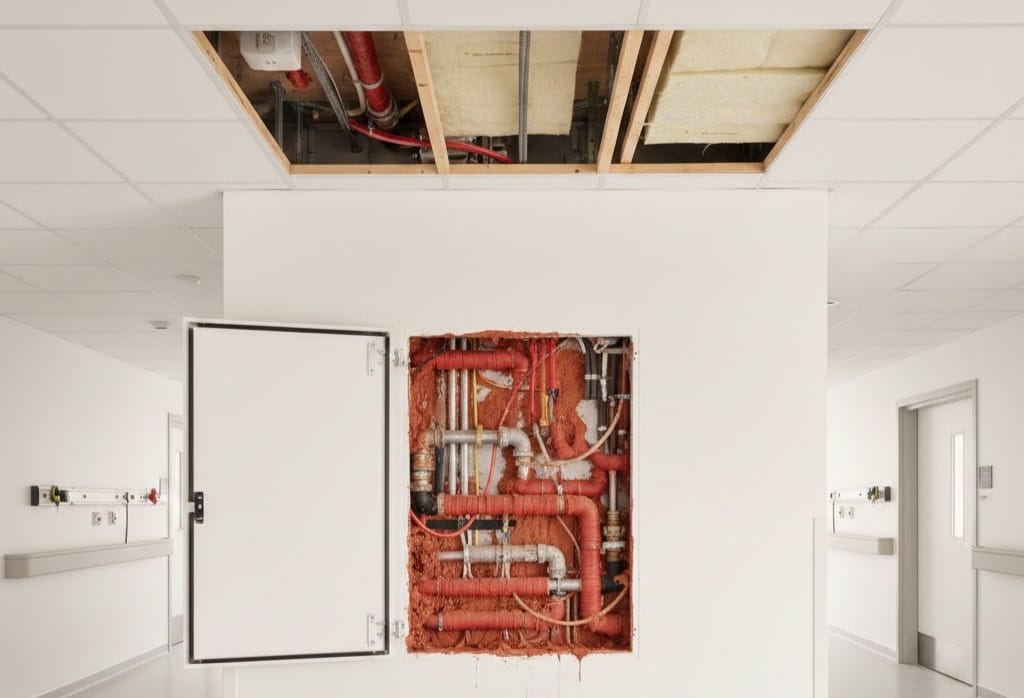
One of the most common issues in healthcare buildings is the failure of fire compartmentation. Over time, maintenance works such as installing new pipes, cables, or ventilation systems can unintentionally create gaps in walls and floors.
These breaches allow smoke and fire to travel rapidly between compartments, reducing evacuation time and increasing risk to occupants.
Effective fire-stopping systems are designed to seal these gaps using certified fire-resistant materials, but they must be regularly inspected to remain effective.
Challenge 2: Continuous Building Modifications
Hospitals and healthcare facilities are rarely static. Rooms are repurposed, systems are upgraded, and medical infrastructure is frequently expanded.
Each modification introduces potential risks, particularly if fire-stopping systems are not reinstated correctly. Poor workmanship or the use of incorrect materials can compromise entire fire strategies.
This makes ongoing monitoring and verification essential for long-term safety.
Challenge 3: Maintaining Compliance in Live Environments
Ensuring fire safety compliance in healthcare settings is a continuous responsibility rather than a one-time requirement. Regulations such as the Regulatory Reform (Fire Safety) Order 2005 and Building Regulations Part B require that fire protection measures are both installed correctly and maintained throughout a building’s lifecycle.
However, live environments make compliance difficult due to:
- Limited access to work areas
- Pressure to minimise disruption
- Coordination challenges between multiple contractors
- Documentation gaps during refurbishments
Without proper oversight, compliance issues can quickly accumulate.
Challenge 4: Service Penetrations and Infrastructure Complexity
Healthcare buildings contain extensive mechanical and electrical systems. Pipes, ducts, and cables often pass through multiple fire-rated compartments, creating numerous penetration points.
If these are not properly sealed with tested fire-stopping solutions, they become direct pathways for fire and smoke spread. This is one of the most technically demanding aspects of fire safety in healthcare buildings, requiring skilled installation and regular inspection.
Challenge 5: Balancing Safety With Infection Control
Unlike most other sectors, healthcare environments must also prioritise infection control. This can restrict the type of materials used, the duration of works, and even access to certain areas.
As a result, fire safety upgrades must be carefully planned to ensure they do not compromise hygiene protocols while still maintaining effective protection measures.
The Importance of Passive Fire Protection in Healthcare Settings
In healthcare facilities, passive fire protection plays a vital role in containing fire at its source and preventing it from spreading.
Unlike active systems such as alarms or sprinklers, passive systems work continuously and do not require activation. They include:
- Fire-stopping around service penetrations
- Fire-resistant walls, floors, and ceilings
- Cavity barriers and fire barriers
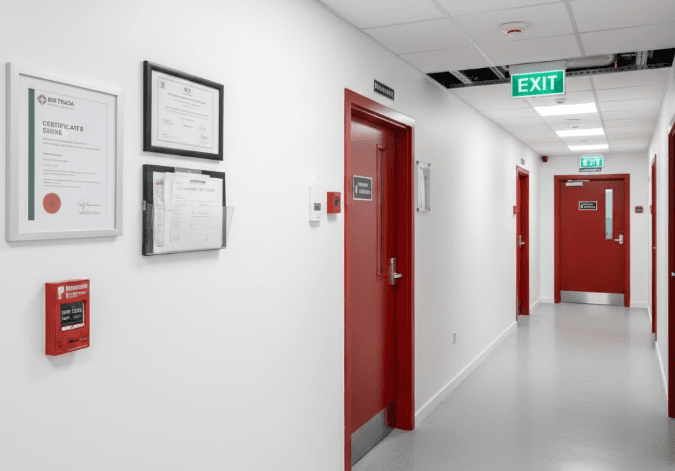
- Fire doors and compartmentation systems
When correctly installed and maintained, these systems create safe zones within a building, allowing staff more time to evacuate patients safely and respond to emergencies.
Ensuring Fire Safety Compliance Across Healthcare Facilities
Achieving long-term fire safety compliance requires a proactive and structured approach. Facilities must not only install compliant systems but also maintain them through regular inspections and remedial works.
Key compliance priorities include:
- Regular compartmentation surveys
- Accurate fire strategy documentation
- Prompt remediation of identified defects
- Certification of all fire-stopping works
- Clear maintenance records for auditors and insurers
Without these measures, even well-designed buildings can quickly fall out of compliance.
Best Practices for Improving Fire Safety in Healthcare Buildings
To strengthen fire protection performance, healthcare facilities should focus on:
- Scheduling regular compartmentation inspections
- Ensuring all building works include fire-stopping reinstatement
- Training maintenance teams on fire safety awareness
- Keeping accurate as-built drawings and fire strategies
- Using certified contractors for all remedial works
A structured maintenance approach not only reduces risk but also improves long-term operational resilience.
Why Choose Zyan Fire Protection for Healthcare Projects
At Zyan Fire Protection, we are independent specialists in fire stopping and compartmentation services across London and the UK. Our focus on healthcare environments means we understand the operational pressures, regulatory demands, and safety priorities unique to this sector.
Our clients benefit from:
- BM Trada Q-Mark third party certified technicians
- Independent advice with no manufacturer bias
- Clear, jargon-free reporting for compliance teams
- Fast turnaround for surveys and quotations
- Experience working in live healthcare environments
By combining technical expertise with practical site experience, we help healthcare providers maintain safe, compliant, and fully documented fire protection systems.
Conclusion
Healthcare buildings demand a higher standard of fire safety due to their complexity, occupancy type, and continuous operation. Challenges such as hidden compartmentation breaches, infrastructure changes, and compliance pressures make ongoing oversight essential.
By prioritising robust systems and regular inspections, facilities can significantly reduce risk and ensure safer environments for patients, staff, and visitors.
Working with experienced specialists ensures that both installation and maintenance meet the highest standards of healthcare fire protection, helping organisations stay protected and compliant.
Frequently Asked Questions
What makes healthcare fire protection different from other buildings?
Healthcare environments require constant operation and accommodate vulnerable occupants, which makes evacuation more complex. This means fire protection systems must be more reliable, continuously maintained, and fully compliant with strict regulations.
How does passive fire protection help in hospitals and care homes?
Passive fire protection contains fire and smoke within designated compartments, slowing its spread through the building. This provides valuable time for evacuation and emergency response without relying on activation systems.
How often should fire safety systems be checked in healthcare facilities?
These reviews should take place regularly through scheduled inspections and whenever building works occur. Many organisations carry out annual or twice-yearly reviews depending on risk level and occupancy type.
Take Control of Your Healthcare Fire Safety Today
Ensure your facility meets the highest standards of protection and compliance. Book a professional site survey with Zyan Fire Protection to identify risks, improve systems, and maintain full regulatory compliance.