When it comes to building safety, fire doors play a vital role in protecting people and property. They are designed to slow the spread of fire and smoke, giving occupants precious time to escape and ensuring compliance with fire safety regulations. In the UK, two of the most common fire door ratings are FD30 and FD60. But what do these terms mean, and how do you know which option is right for your property?
This guide will help you understand the difference between FD30 and FD60 fire doors, the regulations that govern them, and how Zyan Fire Protection can support you in making the best choice.
Understanding Fire Door Ratings in the UK
Fire door ratings in the UK are based on the number of minutes a door can resist fire under test conditions. This rating is determined by rigorous testing in accordance with British Standards and Building Regulations.
- FD30 means the door has been tested to resist fire for at least 30 minutes.
- FD60 means the door can withstand fire for at least 60 minutes.
These ratings are not just about time but also about performance. A compliant fire door must resist flames and limit the spread of smoke, helping maintain compartmentation within the building.
What Is an FD30 Fire Door?
FD30 fire doors are the most commonly specified option in residential and commercial properties. They provide 30 minutes of protection, which is often sufficient in low to medium-risk environments.
Typical uses include:
- Flats and shared housing
- Offices and retail spaces
- Residential corridors and stairwells
Benefits of FD30 fire doors:
- Affordable and widely available
- Compliant with most building regulations
- Suitable for both new builds and refurbishments
What Is an FD60 Fire Door?
FD60 fire doors offer double the protection, with at least 60 minutes of resistance. They are designed for higher-risk environments or buildings where escape times may be longer.
Common applications include:
- Hospitals and care facilities
- High-rise buildings
- Industrial and warehousing environments
- Public buildings with high occupancy
Benefits of FD60 fire doors:
- Extended evacuation time for occupants
- Enhanced protection for property and assets
- Essential for buildings with complex fire strategies
FD30 vs FD60: Which Fire Door Do You Need?
Choosing between FD30 and FD60 depends on several factors, including the type of building, its use, and the fire strategy in place.
Consider:
- Occupancy: More people or vulnerable residents may require FD60.
- Building height and layout: Taller or more complex structures often require higher-rated doors.
- Risk assessment: Your fire risk assessment will provide specific recommendations.
In many cases, a mix of FD30 and FD60 doors will be used throughout the same property, depending on the location and level of risk.
Why Choose Zyan Fire Protection?
At Zyan Fire Protection, we know that fire doors are more than just compliance requirements. They are life-saving measures that protect people, property, and businesses.
Here’s why organisations across London and the UK choose us:
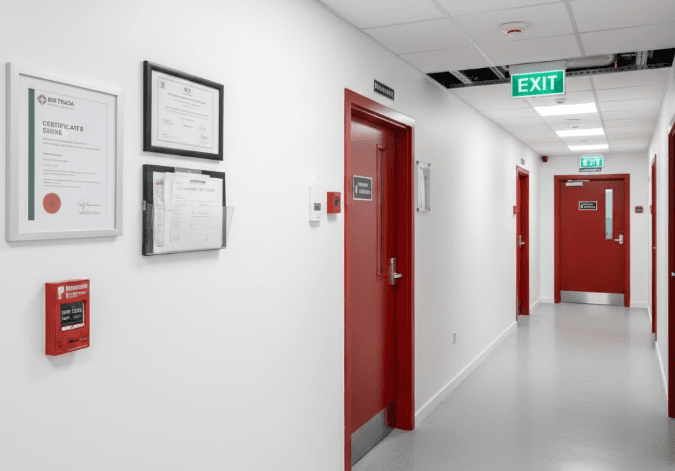
- Certified contractors with BM Trada accreditation
- Independent experts offering impartial advice tailored to your building
- Clear documentation and digital reporting for full compliance
- Fast turnaround with a one-day quote promise
- Expertise across every sector, from residential and social housing to healthcare and education
We make sure every fire door we install, inspect, or maintain is fully compliant and fit for purpose, helping you meet your legal obligations with confidence.
Conclusion
Both FD30 and FD60 fire doors are critical tools in fire safety, each serving specific purposes depending on the risks and requirements of your building. FD30 provides reliable protection for most residential and commercial spaces, while FD60 delivers higher resistance for complex, high-risk environments. The key is to ensure your fire doors are properly specified, installed, and maintained.
With Zyan Fire Protection, you gain a trusted partner who ensures your fire doors meet the highest standards of safety and compliance.
FAQs
What does FD stand for in fire doors?
FD stands for Fire Door. The number following it indicates the number of minutes the door has been tested to resist fire.
Why are fire doors important in passive fire protection?
Fire doors are an essential part of Passive Fire Protection UK standards and wider passive fire protection systems. They help provide effective fire protection for building safety by slowing the spread of fire and smoke, supporting safe evacuation, and ensuring compliance with current UK fire safety regulations.
Can I upgrade an FD30 door to FD60?
No. An FD30 fire door cannot be upgraded to FD60. Each fire door is specifically designed, tested, and certified for its rating. If your building requires FD60, you need a door manufactured and certified to that standard.
How often should fire doors be inspected?
It is recommended that fire doors are inspected every six months in commercial and public buildings. In high-traffic or high-risk areas, more frequent checks may be required.
Take the Next Step
Ensure your property is safe, compliant, and protected. Contact Zyan Fire Protection today to discuss your fire door requirements and book a professional survey with our certified team.