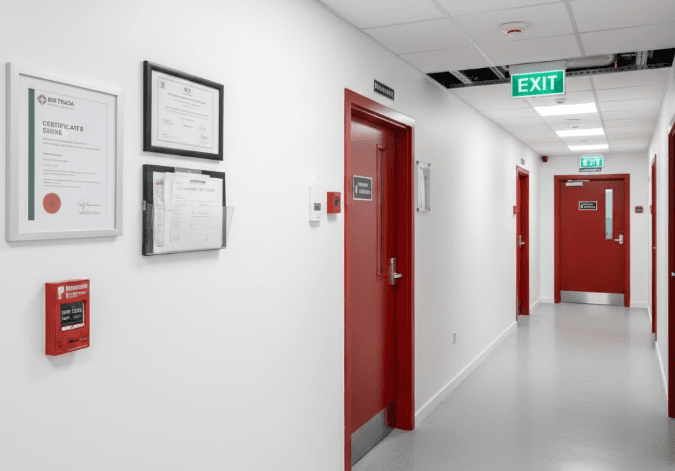
Fire safety is not something to overlook, whether you own a home or manage a business. Fire doors play a vital role in slowing down the spread of flames and smoke, giving occupants valuable time to escape and protecting property.
However, the fire door types used in homes are often different from those found in commercial spaces. Understanding these differences helps you stay compliant with fire door ratings UK standards and ensures the right level of protection.
Why Fire Doors Matter
Fire doors are more than just doors. They are specially designed safety features that:
- Contain fire and smoke within a specific area
- Maintain compartmentation in a building
- Protect escape routes for occupants
- Comply with fire safety regulations
Whether you’re a homeowner or a business manager, having the correct fire door installed is essential for safety and compliance.
Fire Door Types in Homes
In residential properties, fire doors are most commonly required in areas where there is a higher risk of fire, such as kitchens, garages, or between floors in multi-storey houses.
The most common type for domestic use is the FD30 fire door, which provides 30 minutes of fire resistance. This is often sufficient for homes, giving enough time for people to evacuate safely.
Features of fire door types typically used in homes include:
- FD30 rating for standard fire protection
- Designed to integrate seamlessly with interiors
- Can be fitted in key locations like loft conversions, hallways, and internal doors leading to garages
- Often required in houses of multiple occupation (HMOs) and flats
Homeowners benefit from a solution that balances fire safety with aesthetics, ensuring that safety measures do not disrupt the look and feel of the property.
Fire Door Types in Businesses
Business environments usually require a more robust approach. With higher occupancy levels, complex layouts, and stricter fire safety responsibilities, commercial spaces often need enhanced fire door ratings UK standards.
Common features of fire door types used in businesses include:
- Higher resistance options such as FD60 or more, offering up to 60 minutes of fire protection
- Heavy-duty construction to withstand frequent use
- Integration with fire alarms, access systems, and emergency lighting
- Regular inspection and maintenance to stay compliant with regulations
In sectors such as healthcare, hospitality, or education, fire doors must not only meet higher safety standards but also minimise disruption in everyday operations. Businesses have a duty of care to staff, visitors, and customers, which means choosing the right fire door type is not optional but a legal requirement.
Key Differences Between Homes and Businesses
The contrast between residential and commercial fire doors lies mainly in their rating, durability, and regulatory demands.
- Homes usually need FD30 doors for general safety and compliance
- Businesses often require FD60 doors or higher depending on the fire strategy
- Commercial fire doors are designed for frequent use, heavy traffic, and integration with wider safety systems
- Residential doors focus on protecting escape routes without compromising aesthetics
Both play an essential role, but the scale and complexity of protection differ significantly.
Why Choose Zyan Fire Protection
At Zyan Fire Protection, we specialise in delivering fully certified fire door solutions for both homes and businesses. Our team provides clear, professional advice without unnecessary jargon, ensuring you understand exactly what your property needs.
- Certified BM Trada contractors with proven expertise
- Complete support from survey to installation and aftercare
- Transparent reporting and full documentation for compliance
- Fast response times and reliable service across London and the UK
Whether you’re upgrading a flat, managing a housing portfolio, or overseeing a commercial facility, Zyan Fire Protection ensures your fire doors are compliant, reliable, and installed with precision.
Conclusion
Fire doors are essential for protecting lives and property. While homes often require FD30 doors to meet basic fire safety needs, businesses demand more robust solutions such as FD60 to manage greater risks. Understanding these differences ensures you choose the right fire door type and remain compliant with fire door ratings UK standards.
For expert advice, certified installation, and complete peace of mind, Zyan Fire Protection is here to help.
FAQs
1. What does FD30 mean on a fire door?
FD30 refers to a fire door that has been tested and proven to provide at least 30 minutes of fire resistance.
2. Do all businesses need FD60 fire doors?
Not always. The requirement depends on the fire strategy, building layout, and occupancy levels. Many commercial buildings need FD60, but some may require higher ratings.
3. How often should fire doors be inspected?
Fire doors in commercial properties should typically be inspected every six months. Residential properties should also undergo regular checks, especially in HMOs and flats.
Ready to protect your property with certified fire door solutions? Contact Zyan Fire Protection today for expert advice and installation across London and the UK.