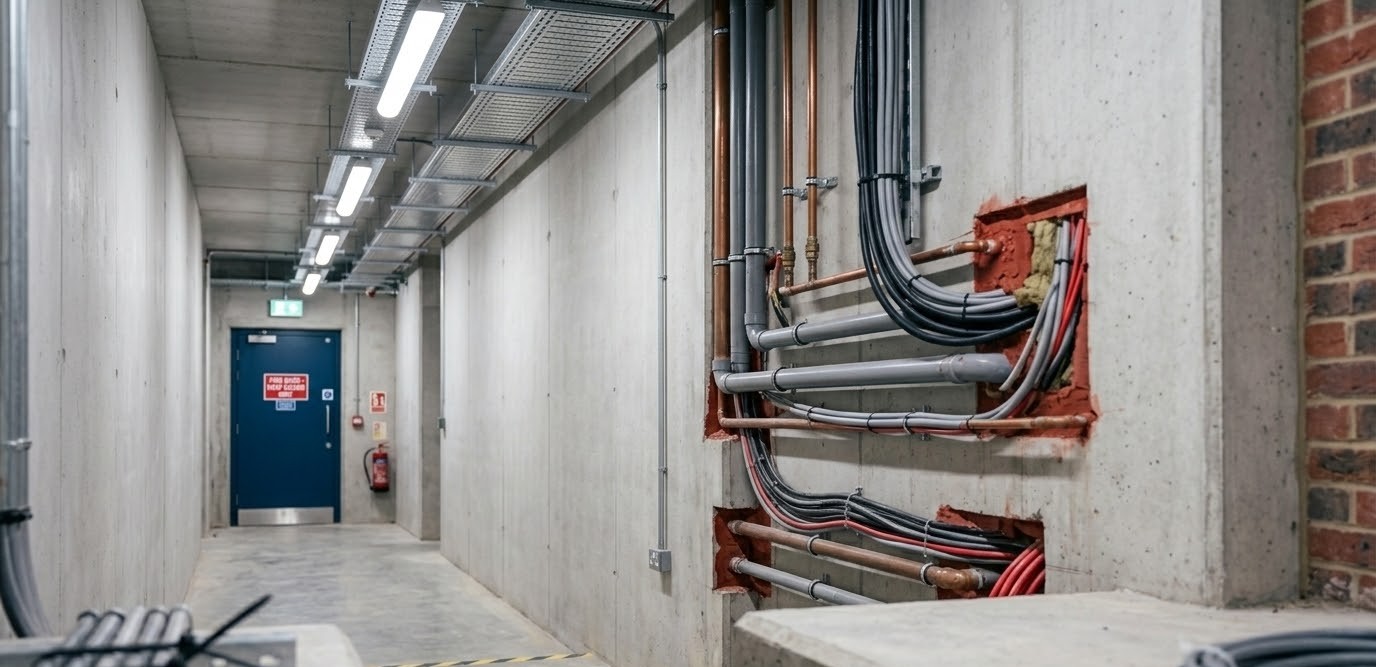
Fire safety in buildings is often judged by what you can see: alarms, extinguishers, and signage. However, some of the most critical protective systems are completely hidden behind walls, ceilings, and service risers. One of the most important of these is compartmentation.
When it is properly installed and maintained, compartmentation slows the spread of fire and smoke, giving occupants valuable time to escape and reducing structural damage. When it fails, the consequences can be severe, even catastrophic.
At Zyan Fire Protection, we regularly uncover hidden defects in buildings that appear compliant on the surface but fail where it matters most.
What Is Compartmentation and Why It Matters
Compartmentation is the process of dividing a building into fire-resistant sections using walls, floors, and ceilings designed to contain fire and smoke. This system is a core part of passive fire protection and is essential in both residential and commercial buildings.
In practice, compartmentation in fire safety is only effective when every penetration, joint, and void is properly sealed using tested fire-resistant materials. Even small breaches around pipes or cables can allow fire to bypass intended barriers.
This is why it is a legal and technical requirement rather than an optional upgrade. It ensures that fire remains contained within a defined area long enough for evacuation and emergency response.
The Regulatory Framework Behind Fire Safety
In the UK, fire safety compliance is governed by strict building standards and guidance. One of the key requirements is adherence to fire resistance and containment rules during construction and refurbishment.
These expectations are outlined in fire safety guidance and reinforced through inspection regimes and building control approvals. In practical terms, building regulations on fire stopping ensure that all penetrations through fire-rated elements are correctly sealed and certified.
Failure to comply can result in enforcement notices, invalid insurance cover, or, in the worst cases, prosecution if negligence contributes to injury or loss of life.
Understanding fire compartmentation regulations is therefore essential for developers, landlords, and facilities managers. These regulations are not just technical checklists. They are life safety measures designed to protect occupants and property.
The Hidden Dangers of Non-Compliant Compartmentation
Non-compliant or poorly maintained compartmentation is one of the most overlooked fire risks in buildings. While a property may appear safe during a visual inspection, hidden breaches can exist behind finishes and within service zones.
Common risks include:
- Unsealed cable and pipe penetrations
- Missing or damaged fire barriers in ceiling voids
- Poorly installed or non-certified materials
- Alterations to building services without fire-stopping reinstatement
- Outdated or undocumented remedial works
These issues significantly reduce the effectiveness of these systems and allow smoke and fire to spread rapidly between compartments.
One of the most dangerous aspects is that failures often go unnoticed until a fire occurs. By that point, the very systems designed to protect the building have already failed.
Ignoring fire compartmentation regulations can also lead to non-compliance during audits, insurance claims, or regulatory inspections, creating both financial and legal exposure.
Why Non-Compliance Happens
Most compartmentation failures are not caused by neglect, but by lack of awareness or poor coordination during building works. Common causes include:
- Refurbishments without proper fire-stopping reinstatement
- Use of non-certified materials
- Incomplete or missing compartmentation surveys
- Poor communication between contractors
- Lack of ongoing maintenance or inspection
Over time, even a compliant building can drift into non-compliance if changes are made without considering building regulations and fire-stopping requirements.
How to Identify and Resolve Risks
The most effective way to manage compartmentation risks is through professional assessment and corrective works. A structured approach typically includes:
- Detailed compartmentation surveys to identify breaches
- Fire stopping installation using certified materials
- Remediation of non-compliant areas
- Documentation for compliance and audit trails
- Ongoing inspection and maintenance planning
At Zyan Fire Protection, we specialise in identifying and resolving hidden compartmentation failures. Our approach ensures that all works align with current fire compartmentation regulations and are fully documented for regulatory and insurance purposes.
We also provide clear reporting that helps building owners understand exactly where risks exist and how they can be resolved efficiently.
Why Choose Zyan Fire Protection
Passive fire protection is only as effective as the contractor behind it. At Zyan Fire Protection, our work is built on accuracy, compliance, and full transparency, from the initial survey through to certification.
Our clients choose us because we provide:
- Certified expertise in passive fire protection systems
- Independent and impartial compliance advice
- Detailed surveys with clear, actionable reporting
- Fully documented fire-stopping and remediation works
- Fast turnaround without compromising quality or safety
We understand that compartmentation in fire safety is not just about installation, but about long-term performance and compliance assurance. Our team works closely with contractors, housing associations, and property managers to ensure buildings remain safe and legally compliant.
The Importance of Proactive Compliance
Fire safety is not static. Buildings change, systems are upgraded, and services are added over time. Without regular checks, even well-designed compartmentation systems can fail.
Staying ahead of fire compartmentation regulations helps prevent costly remediation work later and reduces risk exposure for building owners and managers.
Proactive inspections and timely upgrades ensure that fire containment systems continue to perform as intended throughout the lifecycle of the building.
Conclusion
Non-compliant compartmentation is one of the most serious yet least visible fire safety risks in buildings. While often hidden from view, its impact during a fire can be devastating.
Building owners who understand their compartmentation obligations and act on them will significantly reduce their risk exposure and protect both lives and property. Professional inspection, proper installation, and ongoing maintenance are essential to maintaining safe and compliant buildings.
Frequently Asked Questions
What is compartmentation in fire safety and why is it important?
Compartmentation in fire safety refers to dividing a building into fire-resistant sections to slow the spread of fire and smoke. It is important because it gives occupants time to evacuate safely and helps limit structural damage during a fire.
How do fire compartmentation regulations affect building owners?
Fire compartmentation regulations require building owners to ensure all fire-resistant barriers are correctly installed and maintained. Failure to comply can result in enforcement action, insurance issues, or safety risks for occupants.
What is included in building regulations fire stopping requirements?
Building regulations fire stopping requires all gaps, joints, and service penetrations in fire-rated walls, floors, and ceilings to be properly sealed using tested materials. This ensures the integrity of fire-rated elements within a building.
Ensure Your Building Is Fully Compliant
If you are unsure whether your building meets current fire safety standards, now is the time to act. At Zyan Fire Protection, we provide expert compartmentation surveys, fire stopping solutions, and compliance reporting across London and the UK.
Book a free site survey with our certified team today and ensure your building is safe, compliant, and fully protected.