Fire door standards fall under Building Regulations Part B for construction and the Fire Safety Order 2005 for ongoing use, enforced by Fire and Rescue Services, not HSE. Buildings over 11m need quarterly communal checks and annual flat door checks.
What Are Fire Door Regulations?
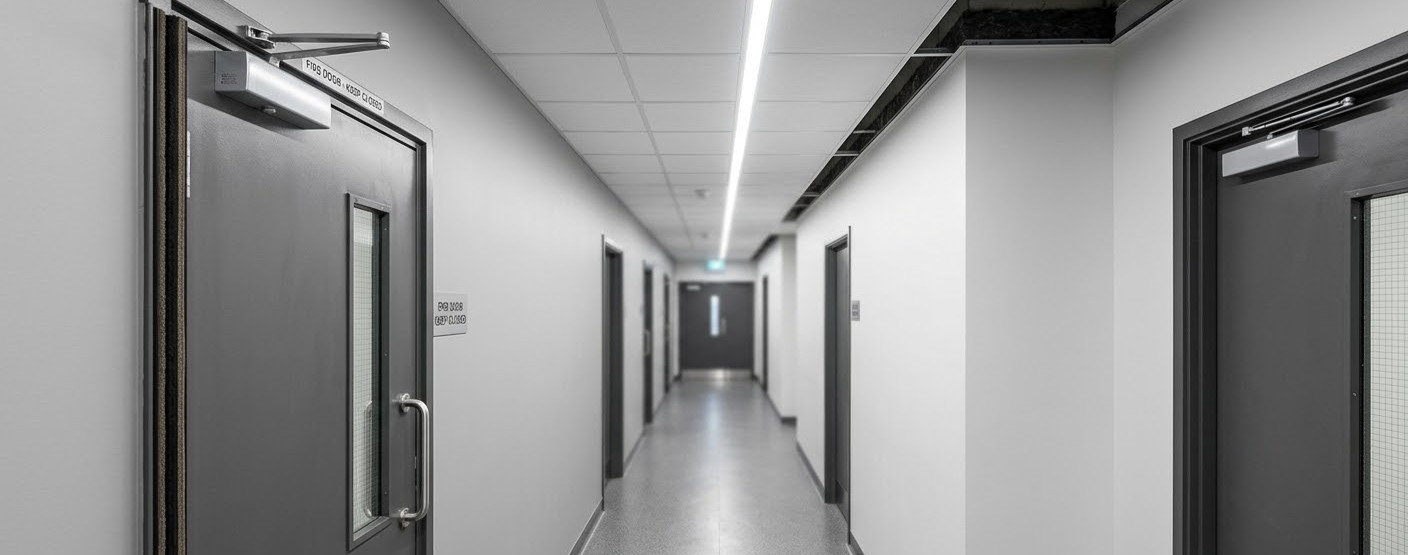
UK fire door regulations ensure that fire doors perform effectively during an emergency, containing fire and smoke and providing safe evacuation routes. These requirements are primarily set out under Building Regulations Part B, supported by British Standards BS 476 and BS EN 1634.
Under the Fire Safety Act 2021 and the Fire Safety (England) Regulations 2022, the Responsible Person for a building, typically the owner, landlord, or manager, is legally accountable for the maintenance and assessment of fire doors.
Compliance requirements include:
- Rating: The correct fire resistance rating suitable for each building type
- Installation: Approved installation practices and fire-resistant materials
- Maintenance: Regular checks and documentation to maintain compliance
Non-compliance can result in unlimited fines, legal liability, and increased fire risk.
FD30 vs FD60 Fire Doors
Fire doors are classified according to the duration they can resist fire, measured in minutes. Choosing the correct rating is critical to protect building occupants and meet your legal obligations.
- FD30 / FD30s – 30 minutes: Suitable for residential properties, HMOs, internal doors in low to medium-risk buildings, corridors, and kitchens.
- FD60 / FD60s – 60 minutes: Required for high-risk areas, commercial buildings, stairwells, escape routes, and multi-storey developments.
The “s” suffix (e.g., FD30s) indicates the door is fitted with smoke seals, which are mandatory for doors opening onto protected escape routes.
Fire Door Inspection Requirements
To remain compliant, the Responsible Person must ensure fire doors are fit for purpose through a regular assessment regime.
- Residential buildings over 11m: Mandatory quarterly visual checks of communal doors and annual checks of flat entrance doors
- Commercial and lower-rise buildings: A minimum of six-monthly checks recommended under BS 9999
- High-traffic areas: Monthly assessments may be required in busy environments such as schools or hospitals
A professional fire door inspection from Zyan Fire Protection includes gap tolerance checks, hardware verification, seal condition assessments, and detailed compliance documentation with prioritised remedial actions.
Fire Door Installation Regulations
Correct installation is as important as the door itself. UK fire door installation regulations require all fire doors to be installed using certified components and methods.
- Intumescent strips and smoke seals must expand under heat to prevent fire and smoke spread
- All hardware including hinges, locks, and self-closers must be fire-rated and UKCA marked
- Gap tolerances must be within 2-4mm at sides and top, and no more than 8-10mm at the bottom
- Installation must be carried out by qualified personnel to ensure the building’s fire strategy remains valid
Penalties for Non-Compliance
Failing to meet your legal fire safety obligations carries significant consequences, including:
- Fines and enforcement notices under the Regulatory Reform (Fire Safety) Order 2005
- Legal prosecution and criminal liability
- Insurance claims denied if fire doors do not meet required standards
- Increased risk of fire and smoke spread, endangering occupants
Certified Fire Door Services from Zyan Fire Protection
We support property owners, landlords, and facilities managers with certified services that align with current UK fire door regulations.
Our services include:
- Assessments and compliance checks
- Installation and upgrades
- Remedial works and compliance improvements
- Detailed digital reports and certification documentation
We work with developers, housing associations, and building owners across London to ensure fire doors remain compliant, functional, and safe.
Frequently Asked Questions
How often should fire doors be assessed?
For residential buildings over 11m, communal doors require quarterly checks. For most other buildings, a professional fire door inspection every six months is the standard recommendation.
What is a Responsible Person?
The legal term for the individual, whether a landlord, employer, or building manager, responsible for ensuring the building meets fire safety requirements.
Can I install a fire door myself?
Fire doors must be installed by trained professionals following UK installation requirements to maintain certification and ensure the door will perform correctly in a fire.
What is the difference between FD30 and FD60 fire doors?
An FD30 provides 30 minutes of fire resistance and is suitable for most residential and low to medium-risk settings. An FD60 provides 60 minutes of resistance and is required in higher-risk areas such as stairwells and commercial escape routes.
Book a Compliance Assessment Today
Ensure your property protects occupants effectively and meets all legal requirements. Our team provides certified assessments, detailed reports, and expert guidance for repairs and installations.